37+ Black History Month Crafts Ideas That Inspire Creativity, Learning & Connection (2026)
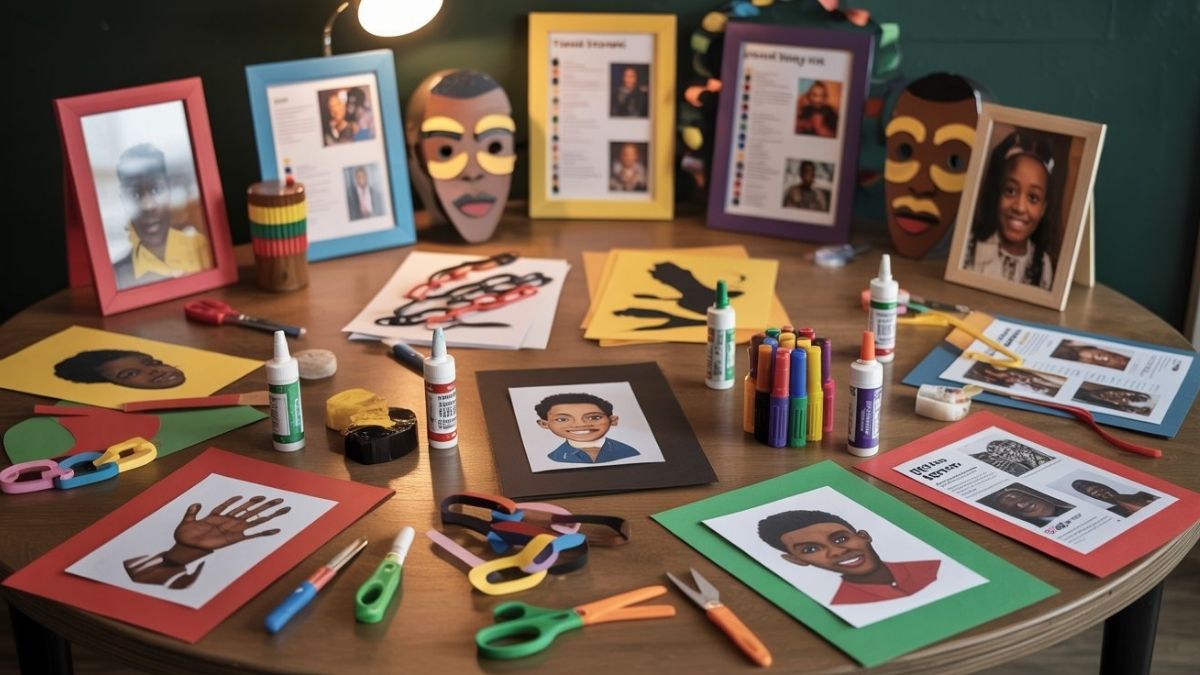
When February approaches, many parents, teachers, and caregivers start searching for Black History Month Crafts that go beyond worksheets and truly spark curiosity.
Crafts have a unique way of turning history into something hands-on, heartfelt, and memorable—especially for young learners.
Whether you’re planning activities at home, in a classroom, or in a community space, creative projects can help children and adults connect emotionally with powerful stories and cultural achievements.
This article is designed to inspire you with thoughtful, age-appropriate ideas that work across all stages—from black history month crafts for toddlers and preschool learners to school age kids and even adults.
You’ll also find adaptable concepts for kindergarten, prek, and mixed-age groups that don’t require expensive supplies or large spaces.
The goal is simple: to help you celebrate Black history in a way that feels inclusive, creative, and genuinely engaging—while making learning fun and meaningful for everyone involved.
🎨 Black History Month Crafts for Babies & Infants (0–2 Years)
At this stage, black history month crafts are less about creating a finished piece and more about building early awareness through sensory exploration, color exposure, sound, and emotional connection.
Babies and infants learn best through touch, repetition, and interaction with caregivers—so these activities are designed to be short, engaging, and fully supervised.
Think of these crafts as experiences rather than projects. Narrate what your baby is seeing, feeling, or hearing, and don’t worry about perfection. The learning happens in the moment.
1. Texture Collage in Pan-African Colors
A texture collage is one of the simplest and most effective ways to introduce babies to color, contrast, and sensory variety.
How to create it:
- Gather soft fabrics, felt, tissue paper, or textured cardstock in red, black, green, and gold
- Glue or tape materials onto a sturdy piece of cardboard
- Let babies touch, rub, and explore the textures while you describe them
What babies learn:
- Sensory awareness through touch
- Early color recognition
- Emotional bonding through caregiver interaction
Conversation starters for caregivers:
- “This fabric feels soft.”
- “This one is smooth and shiny.”
- “Let’s touch the green piece together.”
Safety Tip:
Laminate the collage or place it inside a sealed sensory bag so babies can safely explore without risk of tearing or mouthing small pieces.
2. Handprint Art Keepsake
Handprint crafts are timeless—and during Black History Month, they become meaningful symbols of identity, growth, and belonging.
How to do it:
- Use non-toxic, washable paint
- Gently press your baby’s hand onto paper in symbolic colors
- Clean hands immediately with wipes or warm water
Make it meaningful:
- Add a short affirmation like:
- “Loved from the very beginning”
- “Strong little hands, bright future”
- “Loved from the very beginning”
- Write the date and age for a keepsake parents will treasure
Why it works:
- Encourages sensory exploration
- Creates a memory-focused craft parents value
- Builds emotional connection through touch
Real-life tip:
Many childcare centers send these home in February newsletters as a keepsake families truly appreciate.
3. Music & Movement Ribbon Craft
Music plays a powerful role in Black history, and babies respond instinctively to rhythm and motion.
How to set it up:
- Attach soft ribbons in Pan-African colors to a plastic ring or fabric band
- Ensure ribbons are securely fastened and short enough for safety
- Play gentle jazz, gospel, or soul music
What babies experience:
- Rhythm and sound recognition
- Hand-eye coordination
- Emotional expression through movement
Caregiver interaction ideas:
- Gently move ribbons to the beat
- Clap along with the music
- Name colors as ribbons move
Bonus idea:
This doubles as a calming activity during transitions or quiet playtime.
Related Article: 75 Inspirational Black History Month Quotes & Facts to Share
4. Board Book + Color Match Craft
Books are one of the most powerful tools for early learning. Pairing reading with a simple activity helps reinforce understanding.
How it works:
- Read a board book featuring Black families, joy, or everyday life
- After reading, show babies color cards that match illustrations from the book
- Encourage pointing, touching, or reaching
Why this matters:
- Builds early literacy skills
- Reinforces visual memory
- Connects stories to real-world observation
Simple prompts to say aloud:
- “You saw this color in the book.”
- “That baby looks happy.”
- “Let’s find the green page again.”
Adaptation tip:
For younger infants, simply hold up colors while narrating—participation can be passive and still valuable.
5. Mirror Affirmation Play
Babies are naturally drawn to faces—and seeing themselves reflected while hearing positive language builds early emotional awareness.
How to create the space:
- Use a baby-safe mirror at floor level
- Decorate the edges with large, clear words like:
- Strong
- Loved
- Kind
- Strong
- Sit beside your baby and interact together
Why it’s powerful:
- Encourages self-recognition
- Builds emotional security
- Reinforces positive language from the very beginning
Caregiver script example:
- “That’s you. You are loved.”
- “You are strong.”
This simple activity plants seeds of confidence long before children understand the words themselves.
Related Article: 21 Black History Month Activities to Educate and Inspire
🧸 Black History Month Crafts for Toddlers (2–3 Years)
Toddlers are curious, expressive, and eager to repeat what they see. The best black history month crafts for toddlers focus on simple shapes, bold colors, and hands-on play, while gently introducing ideas of family, community, and togetherness.
Expect mess, movement, and short attention spans—and embrace all of it.
6. Paper Chain of Unity
This classic craft becomes especially meaningful when used to represent connection and community.
How to make it:
- Cut strips of red, black, green, and gold paper
- Help toddlers loop and glue each strip into a chain
- Hang the chain across windows, walls, or doors
Learning benefits:
- Fine motor development
- Color recognition
- Early understanding of togetherness
Real-life example:
Many daycare teachers use this chain as a daily conversation starter, pointing out colors or counting links together.
7. Shape-Based Drum Craft
Music and movement help toddlers express themselves—and homemade drums are always a hit.
Materials needed:
- Empty oatmeal containers or coffee cans
- Construction paper
- Stickers or large shapes
How to use it:
- Let toddlers decorate freely
- Use during circle time or music sessions
- Tap to rhythms together
Skills supported:
- Gross motor coordination
- Pattern recognition
- Listening and response
Extension idea:
Introduce simple beats like “tap-tap-pause” to build early rhythm skills.
8. Crayon Resist Art
This activity adds an element of surprise toddlers love.
How it works:
- Draw simple shapes or symbols with white crayon
- Let toddlers paint over the page with watercolors
- Watch designs appear as the paint spreads
Why toddlers love it:
- Cause-and-effect discovery
- Creative freedom
- Sensory engagement
Tip:
Focus on the experience—not the final image. Every piece will look different, and that’s the point.
9. Family Portrait Collage
Toddlers are beginning to recognize family structures and faces.
How to prepare:
- Pre-cut shapes for faces, hair, eyes, and clothing
- Offer glue sticks and a blank page
- Let toddlers assemble freely
What this teaches:
- Diversity appreciation
- Self-identity
- Emotional connection to family
Caregiver support tip:
Ask open-ended questions like, “Who is this?” or “Tell me about your picture.”
10. Story Quilt Squares
This collaborative craft encourages belonging and shared creativity.
How to do it:
- Give each toddler a paper “quilt square”
- Use stickers, paint, or sponge stamps
- Combine squares into a classroom or family quilt display
Why it’s special:
- Builds community
- Celebrates individual expression
- Creates a powerful visual display
Display idea:
Hang the finished quilt at toddler eye level so they can point to their own square with pride.
Related Article: 107 Inspiring Women’s History Month Quotes to Celebrate Womanhood
🎒 Black History Month Crafts for Preschool & Pre-K (3–5 Years)
Preschoolers are natural storytellers. They love asking questions, sharing ideas, and expressing themselves through color, shape, and play. At this stage, black history month crafts for preschool and prek should focus on identity, community, and emotions rather than timelines or heavy historical details. The goal is to plant seeds of pride, empathy, and curiosity in developmentally appropriate ways.
These crafts work especially well during circle time, art centers, or small-group activities and can easily be adapted for mixed-ability classrooms.
11. Famous Figures Silhouette Art
This activity introduces important historical figures without overwhelming young learners with complex biographies.
How it works:
Prepare simple profile silhouettes (heads and shoulders) printed on sturdy paper. Children fill the silhouettes using paint, crayons, tissue paper, or collage materials.
Teaching moment:
Instead of focusing on names and dates, talk about helpers, leaders, and people who made things better. You might say:
“Many people helped make the world fairer. Everyone can help in their own way.”
Why it works for preschoolers:
- Encourages creativity and self-expression
- Builds early awareness of role models
- Keeps the focus on contribution, not memorization
Classroom tip:
Display all silhouettes together to show that history is shaped by many people, not just one.
12. Freedom Colors Painting Station
This open-ended art station invites emotional exploration through color.
Supplies needed:
- Red, black, green, and gold paint
- Easels or tabletop painting mats
- Smocks and large brushes
How to guide the activity:
Let children freely paint while gently prompting discussion:
- “How does this color make you feel?”
- “Which color feels strong or happy?”
Why it matters:
Colors are powerful tools for emotional learning. This activity allows children to associate feelings with visual expression—an important early literacy skill.
Real-life example:
Many teachers notice that children begin naming emotions more confidently after this activity, especially during future art sessions.
13. Name Meaning Art
Names are deeply personal, and preschoolers love seeing their names celebrated.
How it works:
Write each child’s name in large letters on paper. Provide stickers, markers, and shapes for decorating.
Conversation starters:
- “Who chose your name?”
- “What does your name make you feel?”
- “Everyone’s name is special.”
Why this craft matters:
- Builds confidence and identity
- Encourages respect for differences
- Reinforces letter recognition
Display idea:
Create a “Names Wall” where every child’s artwork is displayed at eye level.
14. Community Helpers Craft
This activity connects Black history to everyday life in a way preschoolers understand.
What to do:
Provide pre-cut paper dolls and clothing pieces. Children choose to create helpers such as:
- Teachers
- Doctors
- Artists
- Musicians
Teaching moment:
Emphasize that helpers come from all backgrounds and that helping others is a powerful way to make change.
Why preschoolers love it:
- Encourages imaginative play
- Builds empathy and social awareness
- Reflects children’s real-world experiences
Extension idea:
Invite children to role-play their helpers during free play time.
15. Rhythm & Pattern Bead Bracelets
This craft combines art, music, and early math skills.
Supplies:
- Large beads in Pan-African colors
- Pipe cleaners or thick string
How to teach it:
Model simple patterns like red–green–red–green and let children copy or invent their own.
Skills developed:
- Fine motor coordination
- Pattern recognition
- Counting and sequencing
Bonus learning:
Play music while children work and talk about how patterns appear in music, art, and movement.
✏️ Black History Month Crafts for Kindergarten (5–6 Years)
Kindergarteners are ready to connect ideas with meaning. They ask why, enjoy storytelling, and are beginning to understand fairness and community. These black history month crafts kindergarten activities blend creativity with early comprehension, helping children express ideas visually while building social awareness.
16. “I Have a Dream” Cloud Art
This craft introduces big ideas—like hope and kindness—in a gentle, age-appropriate way.
How it works:
After a short discussion about fairness, children draw or dictate their dreams on cloud-shaped paper.
Prompt ideas:
- “I dream of being kind.”
- “I dream of helping others.”
Why it works:
- Encourages goal-setting
- Builds emotional intelligence
- Connects personal dreams to shared values
Display tip:
Hang clouds from the ceiling to create a “dream sky” in your classroom.
17. Timeline Wheel Craft
This introduces the concept of time without overwhelming details.
How to make it:
Create a simple paper wheel with three sections:
- Past
- Present
- Future
Children draw pictures in each section.
Teaching focus:
Explain that people in the past helped shape today, and today’s choices help shape tomorrow.
Why it’s effective:
- Builds early sequencing skills
- Encourages cause-and-effect thinking
18. Musical Instrument Making
Music is one of the most engaging ways to explore culture.
Instrument ideas:
- Shakers from bottles and beans
- Tambourines from paper plates
Learning connection:
Discuss how music brings people together and helps tell stories.
Classroom moment:
End the activity with a short “music circle” where everyone plays together.
19. Portrait Frame Craft
This activity celebrates individuality and artistic detail.
How it works:
Children draw portraits of themselves or someone they admire, then decorate frames using patterns inspired by African art.
Why it’s powerful:
- Builds self-awareness
- Encourages observation and detail
- Reinforces respect for different appearances
20. Story Stones
Story stones turn imagination into shared storytelling.
How to prepare:
Paint simple symbols (hearts, stars, books, hands) on smooth stones.
How to use them:
Children choose stones and create stories during circle time.
Why teachers love this craft:
- Encourages language development
- Builds listening and sharing skills
- Works year-round, not just February
📚 Black History Month Crafts for School Age Kids (7–12 Years)
As children move into elementary and upper-elementary years, they’re ready for deeper conversations, independent thinking, and creative ownership.
At this stage, black history month crafts for school age kids work best when they combine research, reflection, and personal expression.
These activities encourage kids to ask questions, tell stories, and feel proud of what they create—while building empathy and understanding along the way.
21. Mini Biography Posters
Mini biography posters are a classroom favorite because they blend art, literacy, and history into one meaningful project. Kids choose a Black historical figure—an artist, leader, inventor, athlete, or everyday hero—and create a poster that highlights key facts, achievements, and personal details.
How to do it:
- Provide a simple template with sections like:
- Name
- Time period
- Why they are important
- One interesting fact
- Name
- Encourage kids to add drawings, symbols, or timelines
- Allow flexibility—some kids may prefer writing, others illustrating
Why it works:
This craft empowers kids to take ownership of learning while practicing research and presentation skills.
Teacher tip:
Have students pair up and explain their poster to a peer. Teaching someone else helps reinforce understanding and builds confidence.
22. Vision Board Collage
Vision boards help children connect Black history to their own futures. Instead of focusing only on the past, this activity encourages kids to imagine who they want to become and how they can contribute to the world.
Supplies needed:
- Old magazines
- Printed words or images
- Construction paper or poster board
- Glue and markers
How to guide the activity:
- Start with a discussion about dreams, goals, and role models
- Ask guiding questions like:
- What makes you feel proud of who you are?
- What kind of change do you want to see?
- What makes you feel proud of who you are?
- Let kids collage images, words, and colors that represent their hopes
Real-life classroom moment:
Many teachers notice quieter students open up during this activity, sharing dreams they’ve never voiced before.
23. Protest Sign Art
This craft introduces kids to the concept of peaceful change in an age-appropriate way. Rather than focusing on conflict, the emphasis is on voice, fairness, and standing up for kindness.
How to frame it:
- Talk about how people use signs to express ideas respectfully
- Discuss themes like fairness, inclusion, kindness, and helping others
Creative process:
- Provide cardboard or poster board
- Encourage bold lettering and strong symbols
- Let kids choose a message they care about
Examples of kid-friendly messages:
- “Kindness Is Powerful”
- “Everyone Belongs”
- “Stand Up for What’s Right”
Why kids love it:
They feel heard—and proud to display their beliefs visually.
24. Cultural Pattern Design
Patterns are a beautiful entry point into cultural appreciation. This activity introduces children to the idea that art can tell stories and carry meaning across generations.
How to introduce the concept:
- Show examples of repeating shapes, symbols, and colors
- Talk about how patterns are used in clothing, buildings, and art
Craft steps:
- Start with graph paper or blank paper
- Encourage kids to sketch a repeating pattern
- Use markers or colored pencils to fill in designs
Extension idea:
Ask kids to name their pattern and explain what it represents—family, strength, joy, or community.
25. Comic Strip History
Comic strips are perfect for visual learners and reluctant writers. This craft allows kids to retell history—or everyday acts of bravery—in a fun, accessible format.
How to structure it:
- Provide comic strip templates with 4–6 panels
- Let kids choose:
- A historical moment
- A famous figure
- A fictional story inspired by real themes
- A historical moment
Creative prompts:
- “A day in the life of…”
- “One brave moment that changed something”
Why it’s effective:
Kids simplify complex ideas into clear storytelling, strengthening comprehension and creativity at the same time.
🖌️ Black History Month Crafts for Teens
Teens want relevance, authenticity, and choice. These black history month crafts for teens give them space to reflect on identity, social issues, and personal voice—without feeling forced or overly structured.
26. Spoken Word Art Posters
This project combines poetry and visual art, allowing teens to express thoughts they may not feel comfortable saying out loud.
How it works:
- Introduce spoken word poetry through short examples
- Encourage teens to write a short poem or free verse
- Combine text with colors, symbols, or abstract designs
Why teens connect with this:
It validates their emotions and gives them creative freedom.
27. Quote Illustration Project
Quotes offer a powerful entry point for reflection. Teens choose a quote that resonates with them and transform it into visual art.
Steps:
- Provide a list of meaningful quotes or allow independent selection
- Explore typography styles—bold, flowing, minimal
- Encourage creative layouts using contrast and color
Reflection prompt:
Why did this quote matter to you?
28. Mixed Media Collage
Mixed media art encourages experimentation and layered storytelling—perfect for teens exploring identity and history.
Materials may include:
- Paint
- Newspaper clippings
- Fabric scraps
- Photos
- Handwritten words
Creative focus:
Teens layer materials to show complexity—past and present, struggle and joy, identity and growth.
29. Social Justice Zine
Zines are small, handmade booklets that allow teens to explore issues they care about deeply.
How to do it:
- Fold paper into mini booklets
- Each page covers a topic, drawing, or poem
- Topics can include identity, community, fairness, or hope
Why it matters:
Teens feel empowered sharing ideas in their own voice—without needing perfection.
30. Photography Story Series
Photography invites teens to look closely at their world. This project blends art, storytelling, and reflection.
Project ideas:
- “What community means to me”
- “Everyday resilience”
- “Moments of pride”
Presentation options:
- Printed photo display
- Digital slideshow
- Captioned photo wall
Bonus:
This works especially well for teens who prefer visual expression over traditional crafts.
🏠 Black History Month Crafts for Adults
These black history month crafts for adults are ideal for community groups, families, educators, or anyone looking for a more reflective and meaningful way to honor Black history. Adult crafts work best when they combine creativity with storytelling, memory, and intention—allowing space for both personal reflection and shared dialogue.
31. Memory Jar Craft
A memory jar is a deeply personal and flexible craft that invites reflection on history, heritage, and lived experiences.
How to do it:
- Use mason jars, recycled jars, or decorative containers
- Decorate with paint, vinyl quotes, fabric, or twine
- Fill with handwritten notes, quotes, affirmations, or family stories
Ideas for what to include:
- Quotes from Black leaders, writers, or artists
- Personal reflections on identity or learning moments
- Family traditions, recipes, or oral history snippets
Why it works:
This craft can be revisited year after year. Many families and community centers add to the jar annually, making it a living archive of growth and reflection.
32. Home Décor Wall Art
Wall art crafts allow adults to create something both meaningful and display-worthy. These projects blend creativity with intention, making them perfect for homes, offices, or classrooms.
Materials to try:
- Canvas, framed paper, or wood panels
- Stencils, paint pens, or printable typography
- Maps, symbols, or meaningful color palettes
Creative prompts:
- Highlight a word like resilience, freedom, or legacy
- Use silhouettes, patterns, or abstract shapes
- Incorporate Pan-African colors subtly or boldly
Real-life tip:
Many educators turn this into a “gallery night,” where participants explain the meaning behind their artwork—sparking powerful conversations.
33. Fabric Art or Quilting Square
Fabric-based crafts connect beautifully to storytelling and tradition. Quilting, in particular, has deep cultural roots tied to history, family, and community.
Ways to approach it:
- Sew, glue, or iron fabric squares
- Use African-inspired prints, denim, or recycled clothing
- Add embroidered words, symbols, or dates
Group idea:
Each person creates one square. When combined, the finished quilt becomes a collective narrative—perfect for community centers or schools.
Why adults love this:
It’s tactile, calming, and meaningful—ideal for slower, reflective crafting sessions.
34. Candle-Making Ritual
Candle-making adds a ritual element to Black History Month crafts, encouraging mindfulness and intentional reflection.
Basic setup:
- Soy wax flakes or beeswax
- Glass jars or tins
- Essential oils (optional)
- Cotton wicks
Reflective element:
As candles are poured, participants can:
- Reflect on a historical figure or moment
- Set intentions for the future
- Share hopes for community and equity
Tip:
Label candles with words like hope, strength, or remembrance for an added symbolic layer.
35. Scrapbook or Journal Spread
Scrapbooking and journaling are perfect for adults who enjoy storytelling and documentation. This craft can be as artistic or minimalist as desired.
What to include:
- Photos, letters, or newspaper clippings
- Quotes, poems, or personal reflections
- Drawings, timelines, or family trees
Prompt ideas:
- “What does Black history mean to me today?”
- “A story I want future generations to know”
Why it’s powerful:
This craft turns learning into a personal archive—something that can be passed down or revisited over time.
🌍 Collaborative & Classroom-Wide Craft Ideas
These black history month crafts emphasize unity, shared voices, and collective storytelling. They work especially well in schools, libraries, workplaces, and community organizations.
36. Community Mural
A community mural is one of the most impactful collaborative crafts because it visually represents many voices coming together.
How it works:
- Each participant decorates a square, tile, or paper panel
- Prompts can include words, symbols, or mini portraits
- Pieces are assembled into one large mural
Where it shines:
School hallways, community centers, libraries, and event spaces.
Added value:
Murals naturally spark conversation and pride—people love finding “their piece” in the larger story.
37. Door or Bulletin Board Display
Interactive door or bulletin board displays are simple yet powerful ways to engage large groups.
Ideas to try:
- “One Word That Inspires Me” wall
- Question prompts with sticky-note responses
- Visual timelines or themed sections
Why it works:
Even those who don’t consider themselves “crafty” can participate, making it inclusive and low-pressure.
38. Cultural Map Wall
This project highlights global connections and the richness of the African diaspora.
How to create it:
- Use a large world map or outline
- Pin or attach symbols, stories, or photos
- Include modern and historical connections
Discussion starter:
Ask participants to share why they chose a location or symbol and what it represents to them.
Evergreen appeal:
This map can grow year after year, evolving into a permanent educational display.
Final Thoughts,
At its heart, Black History Month is about reflection, celebration, and connection—and black history month crafts make those ideas accessible at every age.
From simple sensory projects for babies and infants to expressive art for school age children and meaningful creations for adults, these activities offer both inspiration and practicality.
You don’t need a big budget, a perfectly styled classroom, or professional art skills—just intention, curiosity, and a willingness to create together.
By choosing crafts that match your learners’ ages and interests, you can turn everyday materials into powerful storytelling tools.
Whether you’re exploring black history month crafts for preschool, kindergarten, or adults at home, each project becomes a moment of learning and pride. Start small, adapt freely, and most importantly—enjoy the process.
These creative moments often spark the most meaningful conversations long after the craft is complete.