Halloween Books for Kids: 25 Fun, Spooky, and Sweet Stories to Read This Fall (2026)
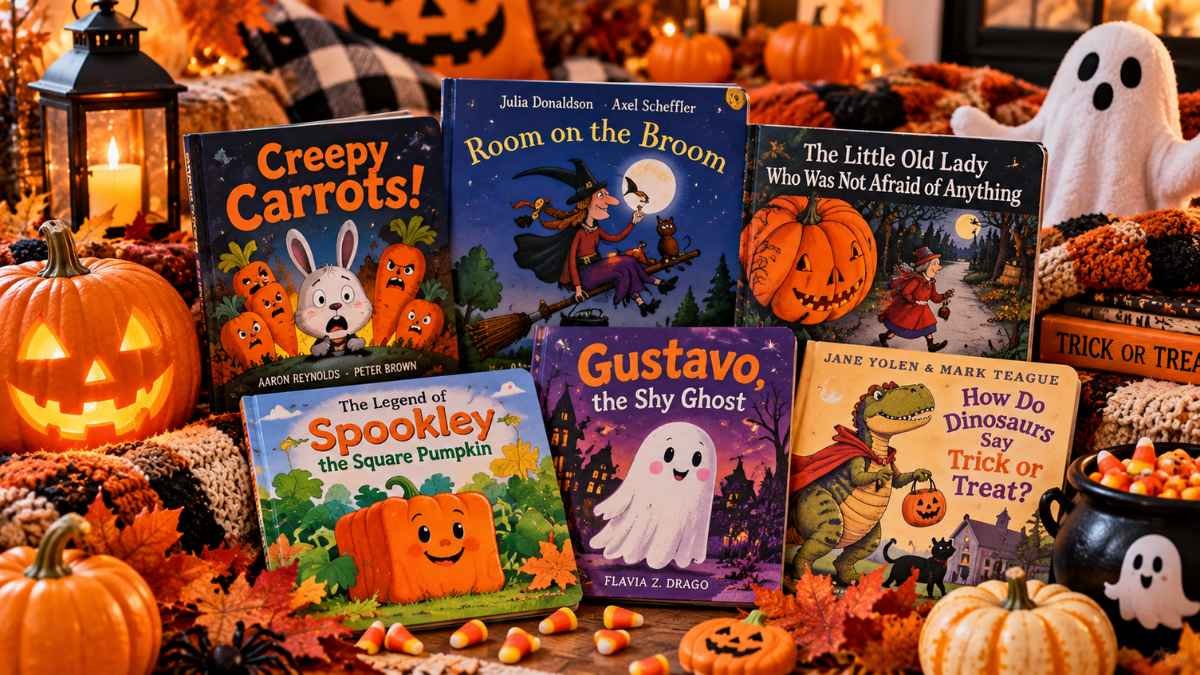
Imagine a cozy October evening with a pile of colorful books, a warm blanket, a few glowing pumpkins, and your child choosing which Halloween story to read first. That simple moment can become one of the sweetest traditions of the season. If you’re looking for Halloween books for kids, you’re in the right place.
The best Halloween stories don’t have to be frightening. Some are silly, some are magical, some introduce gentle spooky characters, and others simply celebrate pumpkins, costumes, friendship, and autumn fun. Reading Halloween picture books together can also create a natural opportunity to build vocabulary, encourage imagination, and make reading feel special.
In this guide, you’ll find Halloween books for children across different ages and reading levels, including funny Halloween stories, spooky-but-not-too-scary choices, preschool favorites, read-aloud ideas, and books that work beautifully for a Halloween classroom or family reading night.
**As an Amazon Associate, I earn from qualifying purchases
So grab a cozy blanket and get ready to create your own Halloween reading tradition!
Why Halloween Books Are Perfect for Fall Reading
Halloween reading has a special kind of magic.
The stories feel seasonal without requiring a big activity.
Even a few minutes of reading can create a memorable October tradition.
And children get to enjoy Halloween while practicing important literacy skills.
Halloween books for kids can turn an ordinary bedtime or classroom reading period into something children look forward to all year. Seasonal books are especially useful because they connect reading with something children are already excited about.
A pumpkin story can introduce autumn vocabulary. A silly monster book can encourage children to predict what happens next. A story about costumes can inspire imaginative play after the book is finished.
Reading together also gives parents and teachers opportunities to ask simple questions and encourage conversation.
Try asking:
- What do you think will happen next?
- Which character would you want to meet?
- Would you wear that costume?
- Is the character actually scary?
- What was your favorite part?
- How would you change the ending?
Quick tip: Keep a small basket of Halloween and fall books somewhere children can easily reach. Rotate the books throughout October to keep the collection interesting.
How to Choose the Best Halloween Books for Kids
Choosing children’s Halloween books doesn’t have to be complicated. Start with your child’s age and personality.
Then think about how spooky is too spooky.
The right book should feel exciting without making bedtime difficult.
Every child has a different comfort level with monsters, ghosts, witches, skeletons, and other Halloween characters. Some children love a slightly creepy story, while others prefer pumpkins, costumes, animals, and funny adventures.
Before choosing a book, consider the child’s reading level and whether you’ll be reading together.
For younger children, look for:
- Large illustrations
- Repetitive language
- Simple storylines
- Rhyming text
- Familiar characters
- Short reading times
For older children, consider:
- Chapter books
- Mystery stories
- Humor
- Folklore
- Adventure
- More complex vocabulary
Also check whether the story contains themes your child may find upsetting.
Pro tip: Don’t assume that a book labeled “Halloween” is automatically appropriate for every child. Read the description first and choose according to your child’s individual comfort level.
Halloween Books for Toddlers
Toddlers love repetition.
They also love bright pictures and familiar objects.
That makes Halloween picture books a wonderful choice.
Keep the stories short, playful, and predictable.
For toddlers, Halloween reading should feel more like a fun seasonal activity than a formal lesson. Books featuring pumpkins, friendly animals, costumes, and simple Halloween vocabulary are often easier for very young children to enjoy.
Look for books that let children point at pictures, make sounds, repeat words, or answer simple questions.
Good themes include:
- Pumpkins
- Bats
- Cats
- Costumes
- Trick-or-treating
- Friendly ghosts
- Autumn leaves
- Halloween colors
- Counting
- Simple rhymes
Some toddlers may enjoy interactive books with flaps, textures, or repeated phrases.
Small action: Let your toddler choose between two Halloween books rather than asking them to pick from an entire shelf. Having a choice makes story time feel more engaging.
Halloween Books for Preschoolers
Preschoolers are ready for bigger stories.
They can follow characters through simple adventures.
They also enjoy humor and surprises.
This is a wonderful age for silly Halloween books.
Preschool children often enjoy stories where a character gets into a funny situation and has to solve a small problem. Books about costumes, trick-or-treating, friendly monsters, and Halloween parties can encourage both imagination and conversation.
At this age, don’t worry if your child wants to read the same story repeatedly. Repetition is actually useful for language development because children begin remembering phrases and anticipating what happens next.
Look for:
- Rhyming stories
- Repetitive phrases
- Funny characters
- Gentle monsters
- Halloween adventures
- Interactive illustrations
- Stories with a clear beginning, middle, and end
Pro tip: Pause before the final page and ask your preschooler what they think will happen. Prediction is an easy way to turn story time into an interactive learning experience.
Halloween Books for Kindergarten and Early Elementary Kids
This is where Halloween reading becomes even more exciting.
Children can begin reading independently.
They can also handle longer stories.
Funny mysteries and gentle spooky adventures are especially appealing.
Kindergarten and early elementary readers can enjoy picture books independently or with an adult. This is also a great time to introduce beginner-friendly Halloween chapter books.
Choose books that match the child’s actual reading ability rather than simply choosing books based on age.
A child may enjoy reading:
- Halloween mysteries
- Monster adventures
- Funny ghost stories
- Witch-themed stories
- Pumpkin adventures
- Costume stories
- Halloween poetry
- Early chapter books
Reading difficulty should still be appropriate. A book that is too challenging can turn an exciting seasonal activity into frustrating homework.
Quick tip: Have one book for independent reading and one more advanced book for family read-aloud time.
25 Halloween Books and Story Ideas for Kids
Now for the fun part.
A good Halloween reading list should include different moods.
Some stories should be silly.
Others can be magical, adventurous, or gently spooky.
Here are 25 popular and useful choices to explore with children.
1. Room on the Broom by Julia Donaldson
This is a charming story about a witch who invites several animals onto her broomstick. The rhyming language makes it especially enjoyable as a read-aloud.
The story also provides opportunities to talk about friendship, kindness, cooperation, and helping others.

Best for: Preschool and early elementary readers.
Reading idea: Ask children to name each character who joins the broomstick adventure.
Quick tip: Read it aloud with different voices for each character.
2. The Little Old Lady Who Was Not Afraid of Anything by Linda Williams
This classic Halloween story is full of repetition and sound effects. Children can participate as the story builds toward its memorable conclusion.
It is particularly useful for interactive group reading because children can repeat phrases and sounds together.

Best for: Preschool and kindergarten.
Why kids enjoy it:
- Repetition
- Rhythm
- Sound effects
- Halloween characters
- Interactive storytelling
Actionable idea: Encourage children to create movements for each sound in the story.
3. Creepy Carrots! by Aaron Reynolds
This funny story introduces Jasper Rabbit and a group of carrots that seem to be following him.
It combines humor, suspense, and clever illustrations without becoming overly frightening.
Best for: Kindergarten and elementary readers.
Reading discussion: Ask children whether they think the carrots are actually following Jasper.
Pro tip: Use the book as an introduction to discussing imagination versus reality.
4. Pumpkin Jack by Will Hubbell
Pumpkin Jack follows the life cycle of a pumpkin and can introduce children to seasonal change and nature.
It is particularly useful if you’re looking for a Halloween story that goes beyond costumes and candy.
Best for: Preschool through early elementary.
Learning themes:
- Seasons
- Nature
- Plant life
- Recycling
- Change
Quick tip: Pair the story with a real pumpkin observation activity.
5. Gustavo, the Shy Ghost by Flavia Z. Drago
Gustavo is a gentle ghost who wants to make friends but struggles with shyness.
The story combines Halloween imagery with an emotional theme that many children can relate to.
Best for: Preschool and elementary readers.
Conversation starter: Ask your child what Gustavo could do to make a new friend.
6. Room on Our Rock by Kate & Jol Temple
While not specifically a Halloween book, playful picture books with surprising twists can work well during seasonal story time.
This type of story can be especially useful when you’re creating a broader fall reading basket instead of limiting the collection strictly to Halloween.
Best for: Young children.
Actionable tip: Mix Halloween stories with general autumn books to keep your child’s reading selection varied.
7. Bonaparte Falls Apart by Margery Cuyler
This humorous story features a skeleton whose bones keep falling apart.
It’s a fun option for children who enjoy silly spooky characters rather than genuinely scary stories.
Best for: Preschool and early elementary.
Why it works for Halloween:
- Skeleton theme
- Humor
- Friendship
- Gentle spooky imagery
Quick tip: Ask children how they would help Bonaparte keep his bones together.
8. How to Catch a Witch by Alice Walstead
This playful Halloween-themed story follows the familiar “How to Catch…” format and gives children a chance to imagine clever ways to catch a witch.
Best for: Preschool and early elementary.
Children who enjoy riddles, silly traps, and imaginative characters may particularly enjoy this type of story.
Actionable idea: After reading, ask children to design their own imaginary witch-catching trap.
9. There Was an Old Lady Who Swallowed a Bat! by Lucille Colandro
This Halloween variation of the familiar “There Was an Old Lady” format uses repetition, rhyme, and silly surprises.
Best for: Preschool and kindergarten.
It’s ideal for children who enjoy predictable patterns and joining in with repeated lines.
Pro tip: Encourage children to guess what the old lady might swallow next.
10. The Scariest Book Ever by Bob Shea
This humorous story plays with the idea of being scared and can be a fun choice for children who enjoy silly storytelling.
Best for: Preschool and early elementary.
Reading conversation: Ask your child what makes something funny instead of scary.
11. The Hallo-Wiener by Dav Pilkey
This funny story about a dachshund wearing a hot dog costume combines Halloween humor with a theme of being different.
Best for: Kindergarten and elementary readers.
It can open a conversation about:
- Confidence
- Friendship
- Bullying
- Being comfortable with yourself
Quick tip: Ask children whether they would choose a funny costume or a scary costume.
12. The Legend of Spookley the Square Pumpkin by Joe Troiano
Spookley is different from the other pumpkins because he is square.
The story offers a gentle message about accepting differences and finding value in what makes us unique.
Best for: Preschool through early elementary.
Actionable idea: Ask your child what makes them unique.
13. Skeletons Are Not Spooky by Will Terry
This type of playful skeleton-themed story is useful for children who like Halloween imagery but don’t want genuinely scary stories.
Best for: Preschool and early elementary.
Quick tip: Pair a skeleton story with a simple craft using paper shapes to create a funny skeleton.
14. Room on the Broom: A Halloween Favorite
A familiar Halloween favorite can become even more enjoyable when turned into a family tradition.
Read the story before making Halloween crafts, baking treats, or decorating the house.
Best for: Family read-aloud.
Activity idea: Create paper witch hats or broomsticks after reading.
15. The Bad Seed Presents: The Good, the Bad, and the Spooky
Stories featuring familiar characters can help reluctant readers become more interested in seasonal books.
Best for: Early elementary readers.
Reading tip: Let children compare the Halloween character with characters they’ve encountered in other books.
16. Creepy Crayons!
If your child loves the original Creepy Carrots!, a related story can be a fun addition to the Halloween bookshelf.
Stories involving everyday objects becoming mysterious can encourage children to think creatively.
Best for: Early elementary readers.
Quick tip: Ask children what ordinary object they would turn into a Halloween character.
17. The Halloween Tree by Ray Bradbury
Older children and confident readers may be ready for a more complex Halloween story.
The Halloween Tree explores Halloween traditions, history, adventure, and cultural ideas through a more substantial narrative.
Best for: Older elementary readers and families reading together.
Pro tip: This can be an excellent choice for a family book discussion because it offers more historical and cultural material than a typical picture book.
18. Halloween Is Coming! by Cal Everett
Seasonal books celebrating the arrival of Halloween can help children build anticipation for the holiday.
Best for: Preschool and early elementary.
Look for books with colorful illustrations and predictable seasonal vocabulary.
Actionable idea: Create a Halloween reading countdown using one book each night.
19. Room on the Broom Activity Book
Activity-based books can complement traditional Halloween stories.
Children can color, solve puzzles, trace letters, or complete simple activities after reading.
Best for: Preschool and kindergarten.
Quick tip: Alternate between storybooks and activity books so children don’t feel like every reading session is a worksheet.
20. Halloween-Themed Poetry Collections
Not every Halloween reading experience needs to involve a traditional story.
Short Halloween poems can introduce rhythm, rhyme, vocabulary, and expressive reading.
Best for: Elementary-age children.
Try poems about:
- Pumpkins
- Witches
- Bats
- Cats
- Costumes
- Haunted houses
- Autumn leaves
- Trick-or-treating
Actionable tip: Have children illustrate their favorite poem after reading it aloud.
21. Friendly Ghost Stories
Friendly ghost books are ideal for children who are curious about spooky characters but aren’t ready for scary stories.
Choose books where ghosts are silly, lonely, playful, or helpful rather than threatening.
Best for: Preschool and early elementary.
Pro tip: Look at the illustrations before reading a new ghost story aloud to make sure the visual style matches your child’s comfort level.
22. Halloween Mystery Books
Elementary-age children often enjoy mysteries because they can make predictions while reading.
A Halloween mystery might involve:
- A missing pumpkin
- A mysterious costume
- A strange noise
- A hidden treasure
- A spooky house
- A Halloween party mystery
Best for: Early and upper elementary readers.
Reading idea: Stop before the solution and let your child make a prediction.
23. Halloween Joke Books
Who says Halloween reading has to be serious?
Halloween joke books can encourage children to read independently while giving the whole family something to laugh about.
Best for: Early elementary readers.
Examples of themes include:
- Monster jokes
- Skeleton jokes
- Witch jokes
- Pumpkin jokes
- Knock-knock jokes
Quick tip: Let your child perform three jokes for the family after reading.
24. Halloween Books About Friendship
Halloween stories can also teach meaningful lessons.
Look for books where characters learn about:
- Friendship
- Inclusion
- Courage
- Kindness
- Sharing
- Acceptance
- Confidence
These themes can make seasonal reading more meaningful without turning it into a formal lesson.
Actionable idea: After reading, ask, “What did this character learn about being a good friend?”
25. Halloween Chapter Books for Older Kids
Older children may want something beyond picture books.
Halloween-themed chapter books can include mysteries, magical adventures, humorous stories, and gentle supernatural themes.
Choose according to reading ability and sensitivity rather than simply selecting the “scariest” option.
Look for:
- Age-appropriate suspense
- Interesting characters
- Manageable chapter lengths
- Humor
- Adventure
- Strong vocabulary
Pro tip: Let older children choose their own book from several parent-approved options. Choice can dramatically increase reading enthusiasm.
How to Create a Halloween Reading Basket
A reading basket makes seasonal books feel special.
You don’t need dozens of books.
A carefully chosen collection is enough.
The presentation can be part of the fun.
Choose a small basket, wooden crate, or fabric bin and fill it with books that match your child’s age and interests.
You could organize the basket into categories:
- 🎃 Pumpkin stories
- 👻 Friendly ghost stories
- 🧙 Witch stories
- 🦇 Animal Halloween books
- 🍬 Trick-or-treat stories
- 🕷️ Funny spooky stories
- 🍂 General fall books
Add a cozy blanket and a small battery-operated lantern nearby.
For a classroom, consider using labeled bins so children can choose books independently.
Quick tip: You don’t need to purchase every book. Borrow titles from your local library and rotate them throughout October.
How to Make Halloween Story Time More Fun
Reading the book is only the beginning.
A few simple additions can make children feel like they’re entering the story.
You don’t need expensive supplies.
Your imagination does most of the work.
Try creating a themed reading routine.
Before Reading
Ask:
- What do you notice on the cover?
- What do you think the story is about?
- Which character looks interesting?
During Reading
Pause occasionally to ask:
- What do you think happens next?
- How does the character feel?
- What would you do?
After Reading
Try:
- Drawing a favorite character
- Acting out a scene
- Making a craft
- Retelling the story
- Writing a new ending
- Creating a costume
- Baking a themed treat
Pro tip: Don’t interrupt every few pages with questions. Let children enjoy the story first, then discuss the most interesting parts afterward.
Halloween Reading Activities for Kids
Reading becomes even more memorable when children can connect the story to an activity.
The activity doesn’t need to be complicated.
A few household supplies are enough.
Think simple, creative, and age appropriate.
Try these ideas:
Pumpkin Story + Pumpkin Craft
Read a pumpkin book, then create paper pumpkins using orange construction paper.
Ghost Story + Ghost Art
Read a friendly ghost story and make ghosts from cotton balls or white paper.
Witch Story + Pretend Play
After reading a witch story, create imaginary magic spells using silly words.
Monster Story + Drawing
Ask children to design their own friendly monster.
Halloween Mystery + Treasure Hunt
Hide a small Halloween-themed object and create simple clues based on the story.
Costume Story + Dress-Up
Read a costume book and then let children create their own costume from items around the house.
Actionable tip: Choose an activity that extends the story instead of distracting from it. The goal is to make reading the starting point for more creativity.
How to Choose Halloween Books for Sensitive Kids
Not every child loves spooky stories.
That’s completely okay.
Halloween can be fun without being frightening.
Choose books that match your child’s personality.
Some children become nervous around:
- Dark illustrations
- Monsters
- Ghosts
- Haunted houses
- Skeletons
- Loud or suspenseful scenes
- Characters in danger
For these readers, choose books centered around:
- Pumpkins
- Autumn
- Animals
- Costumes
- Friendship
- Humor
- Baking
- Fall activities
- Friendly magical characters
You can also preview a book before introducing it.
Quick tip: If your child says a book is scary, believe them. There’s no need to convince them to finish it. Choose something gentler and return to spooky stories when they’re ready.
Halloween Books for Classroom Reading
Teachers can use Halloween books to support literacy while keeping seasonal activities engaging.
The best classroom choices offer opportunities for participation.
Repetition is especially useful with younger students.
Older students can explore themes and writing activities.
Consider organizing classroom books by reading level or theme.
Preschool and Kindergarten
Choose:
- Rhyming books
- Repetitive stories
- Counting books
- Picture books
- Interactive stories
Early Elementary
Choose:
- Short chapter books
- Mysteries
- Funny stories
- Character-driven adventures
Older Elementary
Choose:
- Folklore
- Halloween history
- Mystery
- Poetry
- More advanced fiction
Possible classroom activities include:
- Character descriptions
- Story sequencing
- Vocabulary worksheets
- Prediction exercises
- Creative writing
- Book reviews
- Alternative endings
Pro tip: Keep the focus on reading and literacy rather than making Halloween activities the entire lesson.
How to Build a Halloween Family Reading Tradition
A family reading tradition can become one of the best parts of October.
It doesn’t have to take an hour.
Even ten minutes can be meaningful.
Consistency matters more than length.
Try a simple 31 Nights of Halloween Reading tradition.
Each night, choose one story, poem, or chapter.
You can make it more exciting by creating a small routine:
- Turn on a cozy lamp.
- Choose one Halloween book.
- Let a child select the reading spot.
- Read together.
- Ask one fun question.
- Finish with a small seasonal activity.
You could even create a printable reading chart where children mark each night they read.
For families with older children, everyone can read independently for 15–20 minutes and then share what they enjoyed.
Actionable tip: Start with just seven nights instead of committing to the entire month. If your family enjoys it, extend the tradition.
Common Mistakes When Choosing Halloween Books
Choosing seasonal books sounds easy.
But a few mistakes can make reading time less enjoyable.
The good news is that they’re easy to avoid.
A little planning makes a big difference.
Choosing a Book That’s Too Scary
A frightening illustration can be enough to upset a young child.
Ignoring Reading Level
A book that’s far beyond a child’s ability can create frustration.
Buying Too Many Books
You don’t need an enormous collection. A few excellent choices are enough.
Making Every Reading Session Educational
Sometimes children simply want to enjoy a funny story.
Forgetting Individual Preferences
One child may love witches while another prefers pumpkins and animals.
Avoiding Repetition
If your child wants to hear the same book every night, that’s not necessarily a problem.
Pro tip: Choose books based on the individual child rather than choosing solely according to a generic age recommendation.
Budget-Friendly Ways to Find Halloween Books for Kids
You don’t need to spend a lot to create an amazing Halloween library.
In fact, buying every seasonal book can become expensive.
There are plenty of affordable alternatives.
The library is your best friend.
Try these options:
- Borrow books from your local library.
- Check used bookstores.
- Look for library book sales.
- Swap books with other families.
- Search your existing children’s collection.
- Buy a few favorite books and borrow the rest.
- Look for seasonal collections.
- Ask grandparents or relatives to gift a book.
You can also create a “new-to-us” basket where borrowed books feel special even though they aren’t permanently owned.
Quick tip: Spend your budget on books your child wants to reread, and borrow books that are mainly seasonal or one-time reads.
How to Start a Halloween Book Collection
Building a children’s seasonal library doesn’t have to happen all at once.
Start small.
Choose books your child genuinely enjoys.
Then add a few new favorites each year.
A balanced collection might include:
- 3 funny Halloween books
- 3 pumpkin stories
- 2 gentle spooky books
- 2 friendship stories
- 2 autumn books
- 2 beginner readers
- 1 Halloween activity book
- 1 longer family read-aloud
Over time, your collection becomes something children remember from year to year.
You can even write the year inside each new book as a family memory.
Actionable idea: Choose one special Halloween book each year and write a short note inside the cover about why your family loved it that October.
Halloween Reading Questions to Ask Kids
Questions can turn a passive story into an active conversation.
But they don’t have to feel like homework.
Keep them playful.
There are no wrong answers when you’re discussing imagination.
Try asking:
- Which character would you invite to your Halloween party?
- What was the funniest part?
- Which character surprised you?
- Would you be brave enough to enter the house?
- What costume would you give the main character?
- What do you think happens after the story ends?
- Which character would make the best friend?
- Would you change anything about the story?
- What would you draw from the book?
- What title would you give the story?
For older children, ask deeper questions about character choices, conflict, and theme.
Pro tip: Choose one or two questions rather than turning story time into an interview.
Final Halloween Reading Checklist
Before October begins, create a simple reading plan.
It doesn’t need to be perfect.
The goal is to make books part of the season.
A little preparation can make October feel magical.
Your Halloween Reading Checklist
- Choose books appropriate for your child’s age.
- Consider your child’s comfort with spooky themes.
- Borrow books from the library.
- Create a small Halloween reading basket.
- Include funny and gentle choices.
- Add a few pumpkin or fall books.
- Choose one family read-aloud.
- Plan a few book-related activities.
- Let children choose some of their own books.
- Create a cozy reading space.
- Avoid making every story educational.
- Repeat favorite books as often as your child wants.
Small action: Pick three books tonight and place them somewhere visible. You’ve already started your Halloween reading tradition.
Conclusion
The best Halloween books for kids don’t have to be frightening or complicated. From funny monsters and friendly ghosts to pumpkins, costumes, friendship, and autumn adventures, there’s a Halloween story for almost every young reader. The key is choosing books that match your child’s age, reading ability, personality, and comfort level.
Create a cozy reading basket, borrow a few titles from the library, and add simple activities to make each story more memorable. You can even turn October into a family reading tradition with a book each night.
Whether you’re looking for Halloween books for toddlers, preschoolers, kindergarteners, or elementary readers, start with stories your child will genuinely enjoy. Pick one favorite today, grab a blanket, and make some spooky-season reading memories together. Don’t forget to save this list and share it with another parent or teacher looking for Halloween reading inspiration.