
How to Plan Thanksgiving on a Budget: Food Lists, Table Ideas & Tips

Thanksgiving is a wonderful time to gather with family and friends, enjoy delicious food, and create beautiful memories together. But between buying groceries, preparing traditional dishes, decorating the table, and hosting guests, the holiday can quickly become expensive. The good news is that you don’t need a huge budget to celebrate Thanksgiving in a meaningful way.
With a little planning, a realistic grocery list, and a few creative ideas, you can enjoy a delicious Thanksgiving dinner without overspending. Whether you’re hosting a traditional family dinner, organizing a Friendsgiving meal, or preparing your first Thanksgiving gathering, a simple plan can make everything easier.
In this guide, you’ll discover how to plan Thanksgiving on a budget, organize a beautiful Thanksgiving table, prepare a Friendsgiving meal, and create a traditional Thanksgiving food list. You’ll also find practical preparation tips to help you enjoy the holiday without spending the entire day in the kitchen.
1. How to Plan Thanksgiving on a Budget
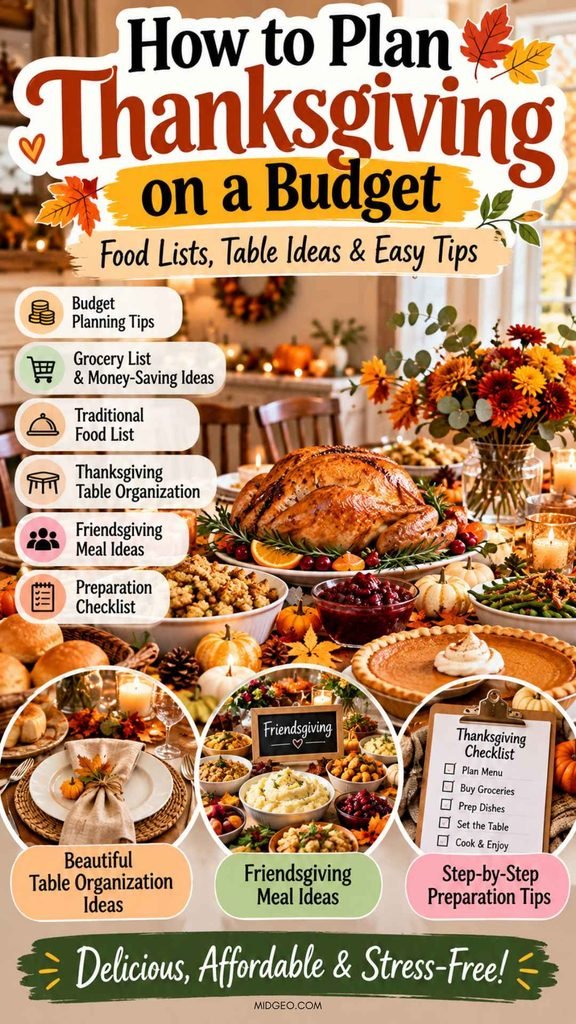
Planning Thanksgiving on a budget starts with deciding how much you can comfortably spend. Instead of shopping without a clear plan, organize your expenses before buying food or decorations.
Set a Thanksgiving Budget
Choose a total spending limit based on the number of guests you’re expecting. Divide your budget into a few essential categories so you know where your money is going.
For example, your budget might include:
- Main dish: turkey, chicken, ham, or another protein
- Side dishes: potatoes, vegetables, stuffing, and casseroles
- Desserts: pumpkin pie, apple pie, or cookies
- Drinks: water, cider, lemonade, or other beverages
- Table decorations: candles, napkins, and a centerpiece
- Extra supplies: food storage containers, foil, and serving utensils
You don’t have to spend the same amount on every category. Prioritize the food your guests enjoy most and keep decorations and extras simple.
Plan Your Menu Before Grocery Shopping
One of the easiest ways to save money is to create your Thanksgiving menu before visiting the grocery store.
Choose one main dish, three or four side dishes, one or two desserts, and a few drink options. This gives everyone plenty to enjoy without leaving you with excessive leftovers.
Check your pantry, refrigerator, and freezer before making your shopping list. You may already have flour, sugar, spices, broth, canned pumpkin, or other ingredients needed for your recipes.
Compare Grocery Prices
Start shopping early enough to compare prices and watch for seasonal sales. Check store flyers, digital coupons, and loyalty discounts before deciding where to buy your ingredients.
Consider these money-saving strategies:
- Compare the price per pound of different turkey sizes.
- Buy store-brand ingredients when the quality is comparable.
- Choose seasonal vegetables and affordable side dishes.
- Purchase shelf-stable ingredients ahead of time when they’re on sale.
- Avoid buying ingredients for recipes you’ll only use once.
- Check whether frozen vegetables cost less than fresh alternatives.
Always compare the final cost rather than assuming that a larger package is automatically cheaper.
Choose Affordable Thanksgiving Recipes
Traditional Thanksgiving food doesn’t have to be expensive. Many classic dishes use inexpensive ingredients such as potatoes, carrots, bread, onions, rice, and seasonal squash.
Affordable menu ideas include mashed potatoes, roasted carrots, homemade stuffing, green beans, cornbread, and apple crisp.
You can also serve a smaller turkey, roast chicken, or another main dish if you’re hosting a small group. Choose an option that fits both your guest count and your budget.
Decorate With Items You Already Own
A beautiful Thanksgiving table doesn’t require expensive decorations.
Use a neutral tablecloth, cloth napkins, everyday plates, and simple glass jars. Add colorful autumn leaves, small pumpkins, pinecones, or branches from your yard where appropriate.
Candles, folded napkins, and a homemade centerpiece can create a warm seasonal atmosphere without a large decorating budget.
Budget tip: Spend your money on the things guests will enjoy most, especially good food and a comfortable gathering space. Simple decorations can be just as charming as expensive displays.
2. How to Organize a Thanksgiving Table
A well-organized Thanksgiving table makes serving food easier and helps guests feel comfortable. You don’t need formal dinnerware or an elaborate tablescape to create an inviting setting.
Decide Between a Buffet and a Seated Dinner
Before arranging your table, decide how you want guests to serve their food.
A buffet-style Thanksgiving dinner works well for larger groups or casual gatherings. Place the food on a separate counter, kitchen island, or side table so guests can serve themselves.
A seated Thanksgiving dinner is ideal for smaller gatherings where you want everyone to share a meal at the same table. Arrange the plates, silverware, napkins, and drinks before guests arrive.
You can also combine both styles by setting the dining table for guests and placing the main dishes on a nearby buffet.
Arrange Plates, Silverware, and Napkins
Keep each place setting simple and practical.
- Place the dinner plate in the center of each setting.
- Position the fork to the left of the plate.
- Place the knife to the right, with its blade facing the plate.
- Add a spoon if your menu includes soup or another dish that requires one.
- Fold the napkin neatly beside the plate or place it on top.
- Set water glasses above and to the right of the plate.
If you’re hosting a casual dinner, everyday plates and silverware are perfectly fine. Consistent place settings can make the table look organized without requiring special purchases.
Create a Simple Thanksgiving Centerpiece
The centerpiece is often the focal point of a Thanksgiving table. Keep it low enough that guests can see and talk to one another.
Try one of these affordable centerpiece ideas:
- A row of mini pumpkins in different sizes
- A glass vase filled with autumn branches
- A wooden tray with small pumpkins and pinecones
- A few unscented candles surrounded by seasonal leaves
- A bowl of apples, pears, or other seasonal produce
Avoid placing tall decorations directly in the middle of the table. If you use candles, position them securely away from fabric, leaves, and other flammable materials.
Plan Enough Space for Food
Don’t overcrowd the dining table with every serving dish and decoration.
Leave enough room for plates, drinks, and comfortable conversation. If possible, use a nearby counter for serving dishes, bread baskets, condiments, and desserts.
For a buffet, arrange items in a logical order:
- Plates and napkins
- Main dish
- Side dishes
- Sauces and condiments
- Bread and rolls
- Serving utensils
Label dishes when guests may need to know about allergens or dietary ingredients. Keep hot foods hot and cold foods cold, and refrigerate perishable leftovers promptly.
3. How to Plan a Friendsgiving Meal
Friendsgiving is a relaxed Thanksgiving celebration shared with friends. It often includes traditional holiday food, fun activities, and a more casual atmosphere than a formal family dinner.
The easiest way to organize Friendsgiving is to plan the menu together and divide the responsibilities among guests.
Choose a Date and Guest List
Start by selecting a date that works for most of your friends. Friendsgiving doesn’t have to take place on Thanksgiving Day itself. The weekend before or after the holiday can be easier for people with family commitments.
Once you have a date, decide how many guests your home or gathering space can comfortably accommodate.
Send invitations early and include the time, location, and any important details about parking, dietary needs, or what guests should bring.
Decide on a Potluck or Host-Prepared Menu
A potluck is one of the easiest ways to keep Friendsgiving affordable. Instead of preparing every dish yourself, ask guests to bring something to share.
You could organize the menu like this:
| Dish category | Suggested contribution |
| Main dish | Turkey, roasted chicken, or a vegetarian main |
| Side dishes | Mashed potatoes, stuffing, or roasted vegetables |
| Vegetables | Green beans, carrots, or salad |
| Bread | Dinner rolls or cornbread |
| Dessert | Pumpkin pie, apple pie, or cookies |
| Drinks | Apple cider, lemonade, or sparkling water |
Ask each guest what they’d like to bring and keep a shared list of contributions. This helps prevent five people from bringing the same dish while nobody brings dessert.
If you’re hosting, consider preparing the main dish and one or two important sides. Let guests handle the remaining dishes.
Include Options for Different Diets
Not everyone eats the same foods, so ask guests about dietary restrictions before finalizing the menu.
A Friendsgiving menu can include vegetarian stuffing, roasted vegetables, a fresh salad, dairy-free sides, and a plant-based main dish.
Keep ingredients and potential allergens in mind, and label dishes clearly when needed. If someone has a serious food allergy, discuss preparation and cross-contact concerns rather than relying on labels alone.
Add Simple Friendsgiving Activities
Food is important, but shared experiences make Friendsgiving memorable.
Try these easy activities:
- Ask everyone to share one thing they’re grateful for.
- Create a gratitude jar with handwritten notes.
- Play Thanksgiving trivia or conversation games.
- Take a group photo with a seasonal backdrop.
- Have a friendly pie or dessert tasting.
- Prepare a playlist with everyone’s favorite songs.
You can also set up a small photo corner with pumpkins, autumn leaves, and a simple sign. Use decorations you already own to keep costs down.
4. Thanksgiving Preparation Tips to Make Hosting Easier
Thanksgiving can feel overwhelming when everything needs to happen at once. A preparation schedule helps you spread the work over several days instead of rushing on the holiday.
Two Weeks Before Thanksgiving
Start with the big decisions.
- Finalize your guest list.
- Set your budget.
- Choose your Thanksgiving menu.
- Confirm who is bringing each dish.
- Check your dinnerware, cookware, and serving dishes.
- Make a list of ingredients and supplies.
If you’re planning to serve turkey, check cooking instructions and allow enough time for safe thawing in the refrigerator.
One Week Before Thanksgiving
Use this week to complete tasks that don’t require fresh ingredients.
- Buy pantry staples and shelf-stable items.
- Check your recipes and cooking times.
- Purchase napkins, foil, and other necessary supplies.
- Clean the dining area and guest bathroom.
- Choose your table decorations.
- Prepare a cooking schedule.
If you need a special ingredient, check its availability early rather than waiting until the last minute.
Two to Three Days Before Thanksgiving
Complete as much preparation as you safely can.
- Buy fresh produce and other remaining groceries.
- Wash and chop vegetables when appropriate.
- Prepare cranberry sauce or other dishes that keep well.
- Make desserts that can be prepared ahead.
- Set the table if you have enough space.
- Prepare serving labels and assign serving dishes.
Store prepared foods in appropriate containers in the refrigerator and follow recipe-specific storage instructions.
The Day Before Thanksgiving
Use the day before the holiday to finish the tasks that would otherwise interrupt your cooking.
- Prepare make-ahead side dishes.
- Organize ingredients by recipe.
- Set out serving utensils.
- Chill beverages.
- Arrange your buffet or dining area.
- Review the cooking schedule.
Check your oven space and cooking temperatures so you know which dishes can cook together and which need separate time.
Thanksgiving Day
Keep the day simple by following your schedule.
Start with the main dish because it often requires the longest cooking time. Prepare side dishes according to their cooking requirements, reheat make-ahead foods safely, and arrange the serving area before guests arrive.
Use a food thermometer to confirm that turkey reaches an internal temperature of 165°F (74°C) in the thickest part of the breast, the innermost part of the thigh and wing, and the thickest part of the stuffing if cooked inside the bird.
Build in a little extra time for unexpected delays. Most importantly, take a few minutes to relax and enjoy the celebration.
5. Traditional Thanksgiving Food List
A traditional Thanksgiving menu often includes roasted turkey, mashed potatoes, stuffing, gravy, cranberry sauce, vegetables, dinner rolls, and pumpkin pie.
You don’t need to prepare every dish. Choose the foods your guests love and build a balanced menu around them.
Main Dishes
The main dish is usually the centerpiece of Thanksgiving dinner.
- Roasted turkey
- Turkey breast
- Baked ham
- Roasted chicken
- Roast beef
- Vegetarian stuffed squash
- Lentil or mushroom loaf
Turkey is a popular traditional choice, but a smaller main dish can be more practical for a small gathering.
Traditional Thanksgiving Side Dishes
Side dishes bring variety, color, and familiar holiday flavors to the meal.
- Mashed potatoes
- Turkey gravy
- Bread stuffing or dressing
- Green bean casserole
- Roasted Brussels sprouts
- Glazed carrots
- Sweet potato casserole
- Cranberry sauce
- Cornbread
- Dinner rolls
- Macaroni and cheese
- Roasted butternut squash
- Garden salad
- Creamed corn
Choose a mix of comforting favorites and lighter vegetables. Three to five sides are often enough for a small gathering, depending on the number of guests and the size of the main dish.
Thanksgiving Desserts
Dessert is a favorite part of the holiday for many guests.
- Pumpkin pie
- Apple pie
- Pecan pie
- Sweet potato pie
- Apple crisp
- Pumpkin cheesecake
- Pecan bars
- Chocolate brownies
- Cinnamon cookies
- Bread pudding
For a budget-friendly dessert table, serve one traditional pie alongside an inexpensive homemade treat, such as cookies or apple crisp.
Thanksgiving Drinks
Offer a few drinks so guests have options throughout the meal.
- Water
- Sparkling water
- Apple cider
- Lemonade
- Iced tea
- Hot tea
- Coffee
- Hot chocolate
You can prepare a large pitcher of a favorite drink instead of buying individual bottles for everyone.
Related: Thanksgiving Traditions Heartwarming Ideas to Celebrate Family, Create New Memories & Make the Day Extra Special
6. Thanksgiving Grocery List: What Food Should You Buy?
A Thanksgiving grocery list helps you stay organized and avoid buying unnecessary ingredients. Use the following list as a starting point, then adjust it to match your menu and guest count.
Produce
- Potatoes
- Sweet potatoes
- Carrots
- Green beans
- Brussels sprouts
- Onions
- Celery
- Garlic
- Fresh herbs
- Cranberries
- Apples
- Salad greens
- Lemons
Meat and Protein
- Whole turkey or turkey breast
- Ham or chicken, if preferred
- Vegetable-based protein for vegetarian guests
Dairy and Refrigerated Items
- Butter
- Milk or cream
- Eggs
- Cheese
- Yogurt or cream cheese, if needed for recipes
Pantry Staples
- Flour
- Sugar
- Brown sugar
- Salt and pepper
- Cooking oil
- Chicken or vegetable broth
- Bread cubes or stuffing mix
- Canned pumpkin
- Cornmeal
- Baking powder
- Cinnamon
- Nutmeg
- Cornstarch
- Gravy ingredients
- Canned or jarred cranberry sauce, if preferred
Bakery Items
- Dinner rolls
- Cornbread
- Pie crusts
- Bread for stuffing
Drinks and Extras
- Coffee and tea
- Apple cider or sparkling water
- Ice
- Napkins
- Aluminum foil
- Food storage containers
- Parchment paper
Grocery shopping tip: Review each recipe before shopping and write down the exact quantities you need. Cross off ingredients you already have at home, and organize the remaining items by grocery-store section.
7. How Much Thanksgiving Food Should You Prepare?
The right amount depends on your guest count, appetite, menu, and whether you want leftovers.
For a small gathering, you might prepare one main dish, three side dishes, a bread option, one dessert, and a few drinks. A larger group may need additional sides, more than one dessert, or a second main dish.
As a general planning guide, consider approximately:
- Turkey: about 1 to 1½ pounds per person for a whole bone-in turkey, depending on desired leftovers
- Potatoes: about ½ pound per person
- Vegetables: about ½ cup to 1 cup per person for each vegetable side
- Stuffing: about ½ to 1 cup per person
- Dinner rolls: 1 to 2 per person
- Pie: one standard 9-inch pie usually provides about 6 to 8 slices
These are estimates, not strict rules. Bone-in meat, serving sizes, guest appetites, and the number of side dishes all affect the quantities you need.
For a potluck or Friendsgiving, coordinate portions with guests so you have enough food without preparing excessive amounts.
Related: 100 Fun Thanksgiving Games for All Ages and Settings
8. Simple Ways to Save Money on Thanksgiving Food
A few thoughtful choices can reduce your grocery bill without making the holiday feel less special.
Choose a smaller main dish. If you’re hosting only a few people, compare the cost of a smaller turkey, turkey breast, or roasted chicken.
Make dishes from scratch when practical. Homemade mashed potatoes, roasted vegetables, and stuffing can be affordable when you already have basic ingredients.
Use seasonal produce. Compare prices on apples, squash, carrots, potatoes, and other seasonal ingredients.
Limit the menu. You don’t need ten side dishes to create a memorable Thanksgiving meal. A few well-prepared favorites are often more enjoyable.
Serve leftovers creatively. Plan to use extra turkey in sandwiches, soups, salads, or casseroles. Refrigerate perishable food within two hours of serving and use refrigerated leftovers within three to four days, or freeze them for longer storage.
Ask guests to contribute. Sharing the cost and preparation makes the celebration easier for everyone.
Related: 100 Thanksgiving Trivia Questions to Ask: Fun, Food, and Festivities
Final Thoughts on Planning Thanksgiving
Planning Thanksgiving doesn’t have to be stressful or expensive. With a realistic budget, an organized Thanksgiving food list, and a simple preparation schedule, you can create a welcoming holiday gathering without overspending.
Start by choosing a manageable menu, checking what you already have, and buying only the ingredients you need. Organize your Thanksgiving table with simple decorations, and consider hosting a potluck if you’re planning a Friendsgiving meal.
Remember that the best Thanksgiving celebrations aren’t measured by the number of dishes on the table or the cost of the decorations. They’re about sharing good food, enjoying meaningful conversations, and spending time with the people who matter to you.
Whether you’re hosting a traditional family dinner or a casual Friendsgiving gathering, a little preparation can help you spend less time worrying about the details and more time enjoying the holiday.
Happy Thanksgiving!