17 Question Games for Kids That Spark Fun Conversations, Big Laughs, and Better Connections in 2026
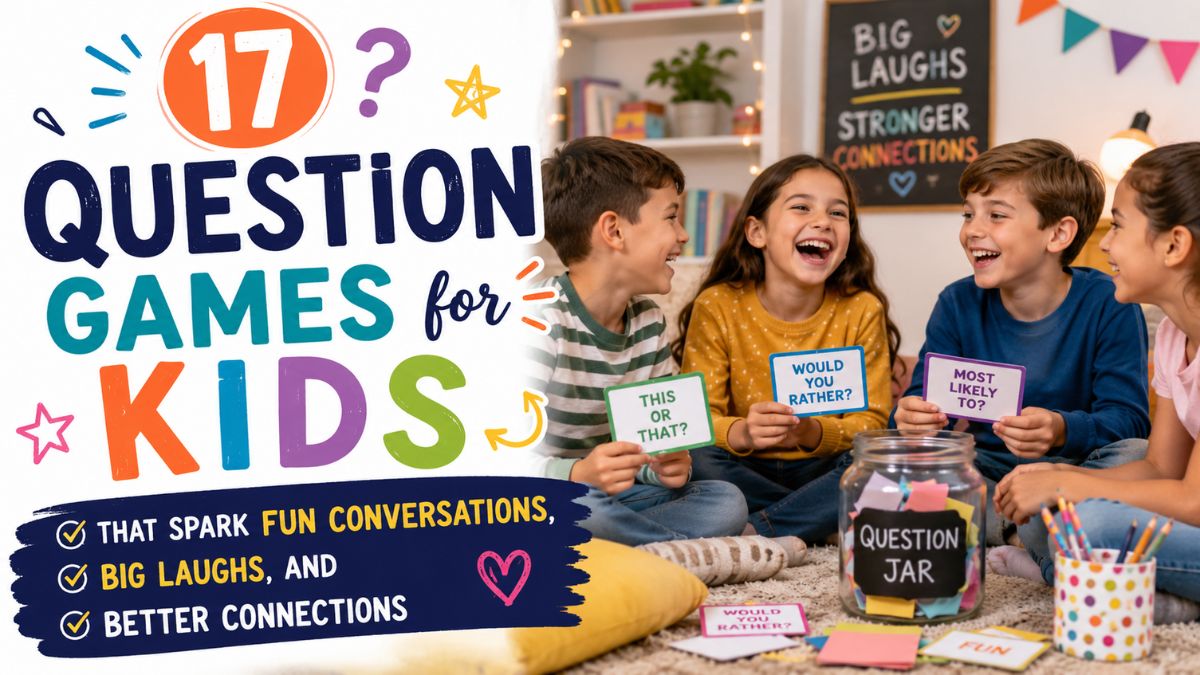
Picture this. A room full of kids. Some are quiet. Some are shy. Some are glued to screens. Then one simple question changes everything.
“Would you rather have a pet dinosaur or a pet dragon?”
Suddenly, hands go up. Giggles start. Stories begin. The room feels different.
That’s the magic of Question Games for Kids. They create connection fast. They make kids laugh. More importantly, they help children open up in ways that feel natural and fun.
I’ve seen this happen during family dinners, classroom activities, long car rides, and birthday parties. A few playful questions can turn silence into nonstop conversation. Kids who barely spoke suddenly want another turn.
Inside this post, you’ll discover ideas like 17 Question Games for Kids To Help Get Them Talking, creative Would You Rather Questions for Kids, fun Icebreaker Questions for Kids, and simple Conversation Starters for Kids that make every moment more engaging.
The best part? No expensive supplies. No complicated setup. Just questions. Simple questions. Powerful results.
Why Question Games Instantly Change the Mood
Kids can go from quiet to chatty in seconds. It happens fast. One fun question opens a door. Then another follows.
I’ve seen it during family dinners, road trips, rainy weekends, and birthday parties. Kids who say, “I don’t know what to do,” suddenly become the loudest people in the room.
The beauty of question games is their simplicity. No setup. No mess. No expensive materials. Just curiosity and connection.
Why parents and teachers love them:
- Encourage communication skills
- Help shy kids feel included
- Build confidence naturally
- Create screen-free entertainment
- Strengthen family connections
- Support social and emotional growth
Quick tip:
Keep a small jar filled with folded question prompts. Place it on your kitchen table or living room shelf. Kids love pulling mystery questions.
Example:
Instead of asking:
“How was school?”
Try:
“If your teacher became a superhero, what would their powers be?”
You’ll usually get a much bigger response.
17 Question Games for Kids To Help Get Them Talking
Some games make kids laugh instantly. Others help them open up. A few do both.
Mix silly with thoughtful questions. That balance keeps everyone interested.
1. Would You Rather Questions for Kids
This game never gets old. Kids love impossible choices. The silly choices are usually what make everyone laugh the hardest.
Try questions like:
- Would you rather have wings or a tail?
- Would you rather eat pancakes every day or pizza every day?
- Would you rather live in a castle or a treehouse?
Ways to make it better:
- Ask kids to explain their answers
- Let them create their own questions
- Add funny sound effects
- Let kids vote on the funniest answer
Visual idea:
Imagine a living room floor covered with soft blankets and oversized pillows while kids laugh and debate whether dragon pets are cooler than unicorn pets. Those little moments quickly become favorite family memories.
If your kids enjoy this type of game, I recommend checking out 200 Engaging Would You Rather Questions for Kids: Fun and Educational Ideas for even more creative prompts.
2. This or That Questions for Kids
Quick choices make this game fast and energetic.
Perfect for younger children.
Ideas:
- Cats or dogs?
- Summer or winter?
- Ice cream or cake?
- Super speed or invisibility?
Tips:
- Keep questions simple
- Use colorful picture cards
- Let kids move to different sides of the room
If your kids love quick decision games, I highly recommend adding more choices to keep the fun going. Check out 45 Exciting “This or That” Questions for Kids to Spark Creativity and Laughter for even more playful ideas that encourage imagination and conversation.
Fun example:
Turn your living room into a mini game zone. Put a sign on one side that says “Cats” and another that says “Dogs.” Kids run to the side they choose, then explain why. Suddenly, a simple question becomes movement, laughter, and storytelling all at once.
3. Yes or No Questions for Kids
Short questions work surprisingly well.
Kids enjoy guessing and answering quickly.
Fun examples:
- Would you eat broccoli-flavored ice cream?
- Can fish wear shoes?
- Would you sleep in a tent tonight?
Ways to use it:
- During car rides
- Waiting in line
- Before bedtime
4. True or False Questions for Kids
Kids love facts. Especially strange ones.
The sillier the fact sounds, the more fun the game becomes.
Examples:
- Bananas grow upside down
- Penguins can fly
- Octopuses have three hearts
Practical tip:
Keep a small notebook of interesting facts ready.
5. 20 Questions
This classic game still works beautifully.
One player thinks of something. Everyone else guesses.
Categories:
- Animals
- Movies
- Food
- Places
- Toys
Helpful ideas:
- Start with broad questions
- Younger kids may need hints
- Use picture cards for visual learners
Creative Games That Help Kids Open Up
Sometimes kids need a little push. Not pressure. Just an easier way to express themselves.
These games create natural conversations.
6. Get To Know You Questions for Kids
New classrooms. Summer camps. Playdates.
These moments can feel awkward.
Good questions help kids relax. They take away pressure and create easy, natural conversations. I’ve seen kids go from sitting quietly in a corner to laughing together after just a few simple prompts.
Examples:
- What’s your favorite thing to do after school?
- What animal would you choose as a pet?
- What makes you laugh?
Helpful tips:
- Pair kids in small groups
- Keep answers short
- Encourage listening
- Let every child have a turn
- Start with light, fun questions before deeper ones
Need even more ideas? Explore 100 Get To Know You Questions for Kids: Fun and Engaging Ways to Connect for a bigger collection of conversation ideas.
Real-life example:Imagine the first day of summer camp. Kids sit quietly with backpacks beside them. One child asks, “If you could have any pet in the world, what would it be?” Suddenly someone says a giraffe, another says a dragon, and now everyone wants to join the conversation. Small questions often create big connections.
7. Icebreaker Questions for Kids
Icebreakers make introductions feel less stressful.
They’re simple and fun.
Ideas:
- If you could invent anything, what would it be?
- What would your dream bedroom look like?
- If you had a robot helper, what would it do?
Visual example:
Picture kids sitting in a circle with colorful bean bags, waiting excitedly for their turn.
8. Conversation Starters for Kids
Sometimes kids want to talk but don’t know where to begin.
Conversation starters remove that pressure.
Questions to ask:
- What’s the funniest thing you’ve seen lately?
- What would you do with one million dollars?
- What’s your dream vacation?
Practical use:
Place conversation cards inside lunch boxes.
9. All About Me Questions for Kids
Kids enjoy sharing things about themselves.
It builds confidence.
Examples:
- What’s your favorite color?
- What’s your favorite memory?
- What makes you happy?
Activity idea:
Create an “All About Me” poster with drawings.
Games That Make Kids Think Differently
Not every game has to be silly.
Some questions stretch creativity and thinking skills.
10. Open-Ended Questions for Kids
Open-ended questions allow freedom.
There are no wrong answers.
Examples:
- What would happen if animals could talk?
- How would school change on the moon?
- What would your perfect day look like?
Helpful tips:
- Give kids time to think
- Avoid interrupting
- Ask follow-up questions
11. Critical Thinking Questions for Kids
Kids are smarter than we sometimes realize.
These questions help them practice solving problems.
Ideas:
- How could we save water at home?
- Why do people recycle?
- What would happen without electricity?
Real-life example:
At dinner, ask one critical thinking question each night.
12. Philosophical Questions to Ask Kids
Kids often have amazing ideas. Sometimes their answers surprise adults. Their perspectives can be funny, thoughtful, and unexpectedly wise.
Questions to explore:
- What does happiness mean?
- Why do people need friends?
- Is it better to be kind or smart?
- If animals could talk, would we treat them differently?
- What makes someone a good person?
Tips:
- Keep the mood light
- Listen carefully
- Avoid correcting opinions
- Ask follow-up questions like “Why do you think that?”
Real-life example:
One child might say happiness means having toys. Another might say happiness means being with family. Those unexpected answers often lead to the most meaningful conversations.
Philosophical questions help children think beyond simple right-or-wrong answers. They encourage imagination and help kids understand feelings, relationships, and the world around them. If you’d like even more inspiration, explore 101 Engaging Philosophical Questions for Kids: Sparking Curious Minds for a deeper collection of ideas and conversation prompts.
Funny Group Games Kids Love
Laughter matters.
Kids remember moments that make them laugh.
13. Never Have I Ever Questions for Kids
This game creates instant energy. Kids start laughing fast. The simple format makes everyone want another round.
Keep questions age appropriate and lighthearted.
Examples:
- Never have I ever eaten a bug
- Never have I ever danced in the grocery store
- Never have I ever worn pajamas backwards
Helpful ideas:
- Use fingers for counting
- Avoid embarrassing topics
- Keep the focus on silly and fun moments
- Let kids create their own prompts for extra laughs
Want even more ready-to-use ideas? Check out 130 Best Never Have I Ever Questions for Kids: Enjoyable and Engaging Prompts! for a bigger collection of fun questions kids will love.
14. Most Likely To Questions for Kids
Kids love guessing who matches funny descriptions.
Examples:
Who is most likely to:
- Forget their backpack?
- Become an astronaut?
- Laugh during a serious moment?
Tips:
- Keep it positive
- Avoid teasing
15. How Well Do You Know Me Questions
This game feels personal and sweet.
Families especially love it.
Ideas:
- What’s my favorite food?
- What’s my favorite movie?
- What’s my dream job?
Visual scene:
Imagine family members around a cozy table laughing because nobody guessed Mom’s favorite snack correctly.
16. Two Truths and a Lie
This game always creates excitement.
Kids enjoy trying to fool each other.
Examples:
- I have ridden a horse
- I love broccoli
- I own a pet tiger
Ways to make it easier:
- Let younger children use pictures
- Keep statements simple
17. Word Association
Fast thinking creates funny moments.
One word leads to another.
Example round:
Sun → Beach → Sand → Castle → Princess
Helpful ideas:
- Set a timer
- Use themes
- Add movement
How to Create a Cozy Question Game Space at Home
The environment matters.
Kids naturally open up when they feel relaxed.
You do not need a big space.
Simple setup ideas
- Floor cushions
- String lights
- Soft blankets
- Small snack trays
- Fun question cards in jars
Budget-friendly options
- Dollar store baskets
- Printable question cards
- DIY decorations
- Reused mason jars
Visual inspiration:
Picture warm fairy lights hanging across a corner. A fluffy rug sits underneath. Bright pillows cover the floor. A small basket holds colorful question cards waiting to be picked.
That setup feels inviting without costing much.
Ways to Use Question Games During Everyday Moments
The best part is flexibility.
Question games fit naturally into daily life.
You don’t have to schedule a special event.
Easy moments to use them
During meals
- Everyone answers one question
- Rotate who chooses
In the car
- Makes long rides easier
- Reduces screen time
Before bedtime
- Creates calm conversations
- Helps kids reflect
At birthday parties
- Great for groups
- Easy entertainment
In classrooms
- Builds friendships
- Supports participation
Pinterest-Worthy Ways to Make Question Games Feel Special
Small details create excitement.
Kids love visual moments.
And Pinterest readers love saving ideas they can actually recreate.
Fun display ideas
- Rainbow question sticks in jars
- Seasonal themed question cards
- Chalkboard question walls
- Mini treasure boxes filled with prompts
Picture-perfect setup ideas
Spring
- Floral cards
- Pastel colors
- Butterfly decorations
Summer
- Beach buckets
- Bright colors
- Sunglasses props
Fall
- Pumpkin-themed cards
- Warm blankets
- Leaves and wood textures
Winter
- Snowflake decorations
- Cozy pillows
- Hot chocolate station
These little touches turn a simple game into an experience kids remember.
Why Kids Remember Conversations More Than Activities
Toys break.
Games end.
But conversations stay.
Years later, kids often remember the moments they laughed until their stomach hurt or shared silly stories with family.
That is what makes these games special.
Whether you’re using Would You Rather Questions for Kids, trying Two Truths and a Lie, playing 20 Questions, or using simple Conversation Starters for Kids, you are creating something bigger than entertainment.
You’re creating connection.
And sometimes that starts with one tiny question.
Conclusion
Sometimes the smallest activities create the biggest moments. A funny question. A surprising answer. A burst of laughter that nobody expected.
That’s why Question Games for Kids continue to be favorites for parents, teachers, and families. They work almost anywhere. Around the dinner table. During road trips. At birthday parties. Even on ordinary afternoons when kids say they’re bored.
You can mix playful ideas like Would You Rather Questions for Kids, Never Have I Ever Questions for Kids, or simple Get To Know You Questions for Kids to keep things fresh and exciting. There is no perfect way to do it. Just start asking.
I believe the best conversations often begin with one simple question.
Now grab your favorite list, gather the kids, and start creating fun memories one question at a time. Which question game are you trying first?